In collaboration with
The National Archives UK
Team
Ojaswi Kejriwal | Anushka Monteiro | Chen Wang (Shaye)| Jade They | Shivangi Gadhoke | Sakshi | Sarthak Joshi | Shivangi Gadhoke | Anwesha Basu
My Role:
Experience Designer and Facilitator
Co-developed a scalable workshop framework transforming the archive from a static collection into an active creative tool.
The National Archives invited a select team of 10 researchers and designers to help reimagine their Register of Designs- an archive of 3 million+ registered trademarks- as a generative tool for creative practitioners.
The Problem
The archive registers was hard to explore. Creative folks loved the content- drawings, fabrics, packaging- but found it dry, heavy, & just not built for discovery or play.
The goal
Make it easier- and way more fun- for creatives to dive in, make their own connections, and use the archive as a starting point for ideas, not just a place for research.
The Solution!
We designed a repeatable workshop framework that empowers National Archives teams to spark creative engagement- internally and with the public.
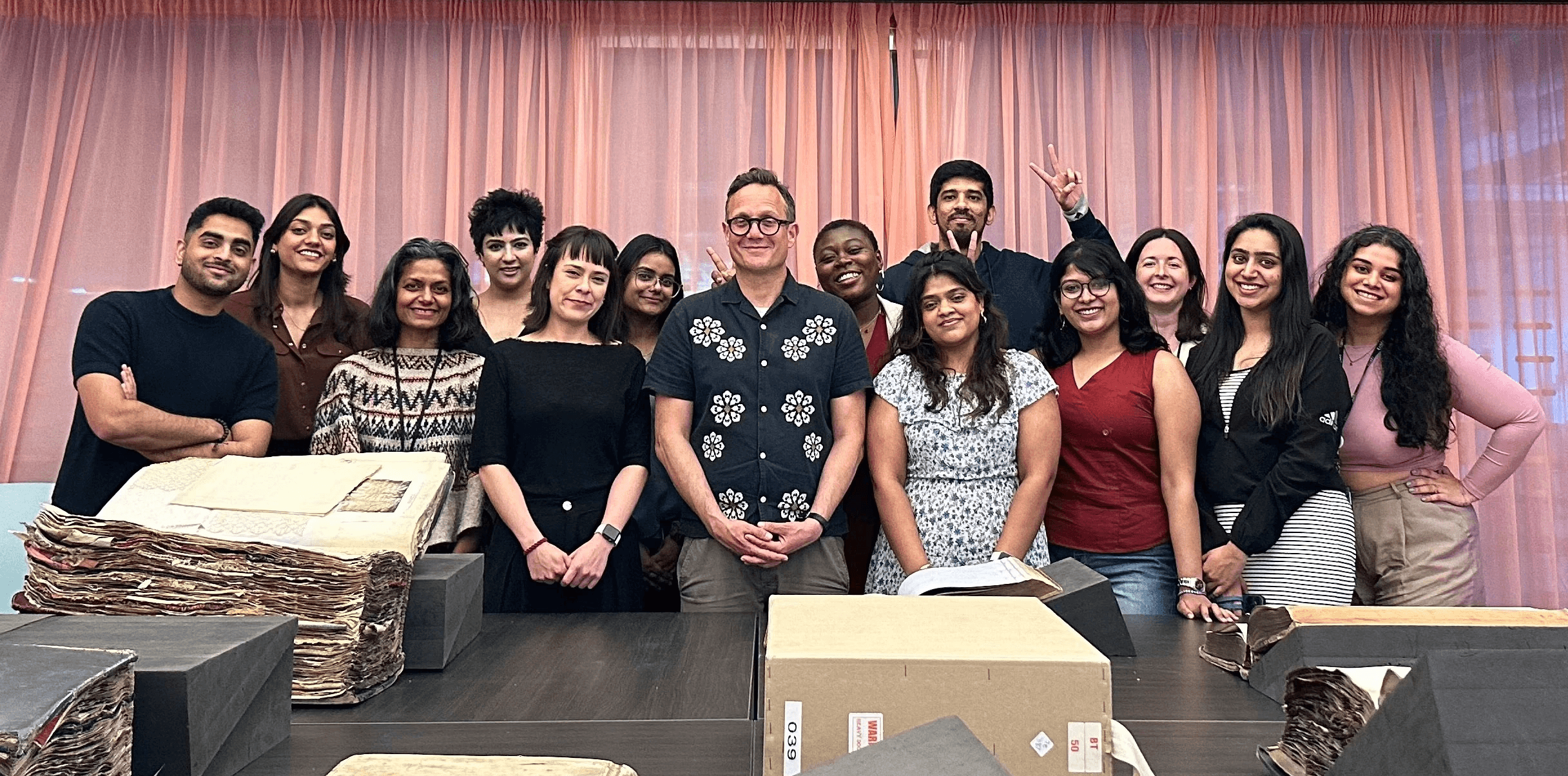
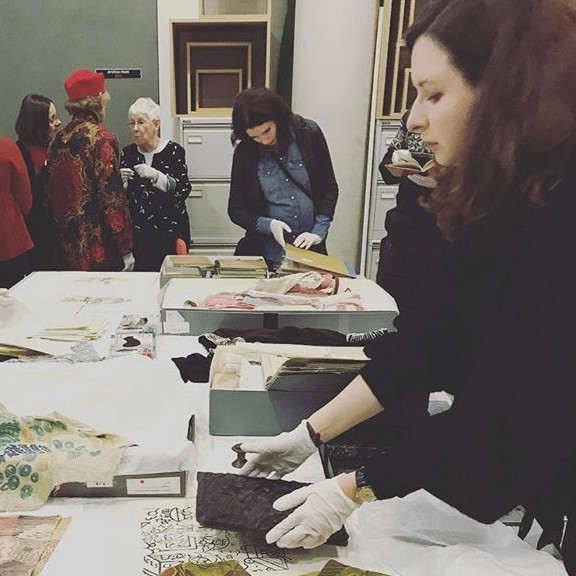
A quick glimpse at the team- and the feedback we got :)
“It was such a breath of fresh air to observe experiential design in the making. They are so lovely and talented…. this is the kind of attitude and energy the design world needs.”
Harithra Chandrapal
Senior User Researcher, National Archives UK
Method 01 – Material Culture (Prown Method)
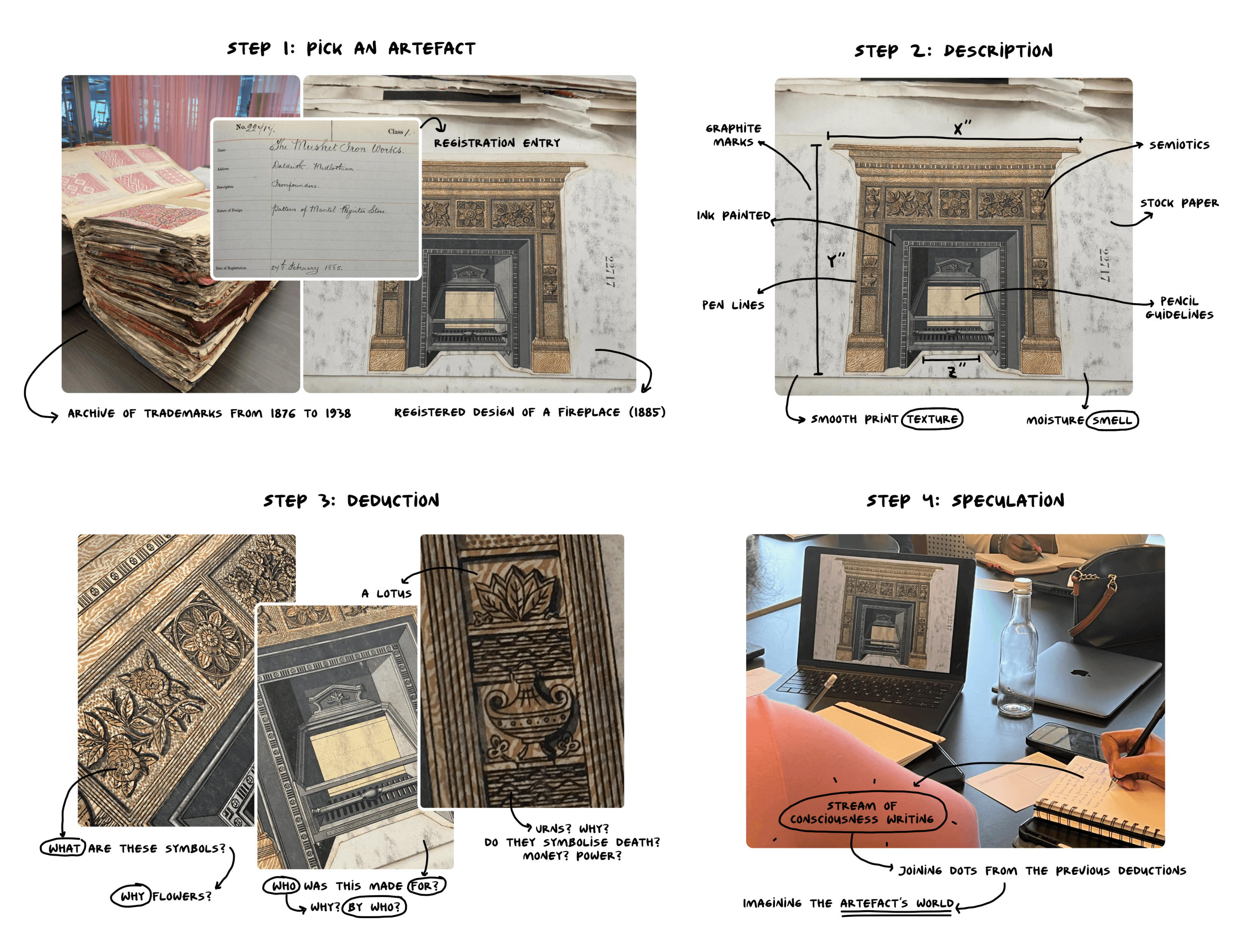
We adapted a research method by Jules Prown (1982) to guide how users engage with physical artefacts — not just as objects to look at, but as things to feel, interpret, and imagine from. This method moves through three stages:
Description
What are the physical qualities of the object? Size, colour, texture, material- the first impression.
Deduction
What story might it carry? Who made it? Who used it? How might it have felt to hold or wear?
Speculation
What could it become? Let imagination take over- a leap into the artefact's world.
As UX researchers, we pushed this further by engaging more-than-visual senses- things like temperature, weight, movement, spatial feel. This opened up richer, more embodied ways of connecting with the archive.
Method 02 – Stream of Consciousness Writing
A writing technique that captures thoughts as they come- raw, unfiltered, and free from structure.
Adapted for the workshop, participants wrote instinctively in response to their chosen artefact. There was no editing or overthinking- just pure mental flow.
Write without stopping
No grammar rules, no structure.
Use your senses
Let texture, smell, & visuals guide words
Follow your mind
Jump from thought to thought- all goes.
As a UX method, it helped uncover emotional, intuitive responses that don’t always surface in traditional research- turning observation into personal, meaningful connection.
We developed a creative workshop that the National Archives could easily run again- with staff, internal teams, or even the public. The goal was to give them a repeatable tool to explore the archive through imagination and creative thinking, not just traditional research.
We developed a creative workshop that the National Archives could easily run again- with staff, internal teams, or even the public. The goal was to give them a repeatable tool to explore the archive through imagination and creative thinking, not just traditional research.
The Lace That Never Touched Her Skin
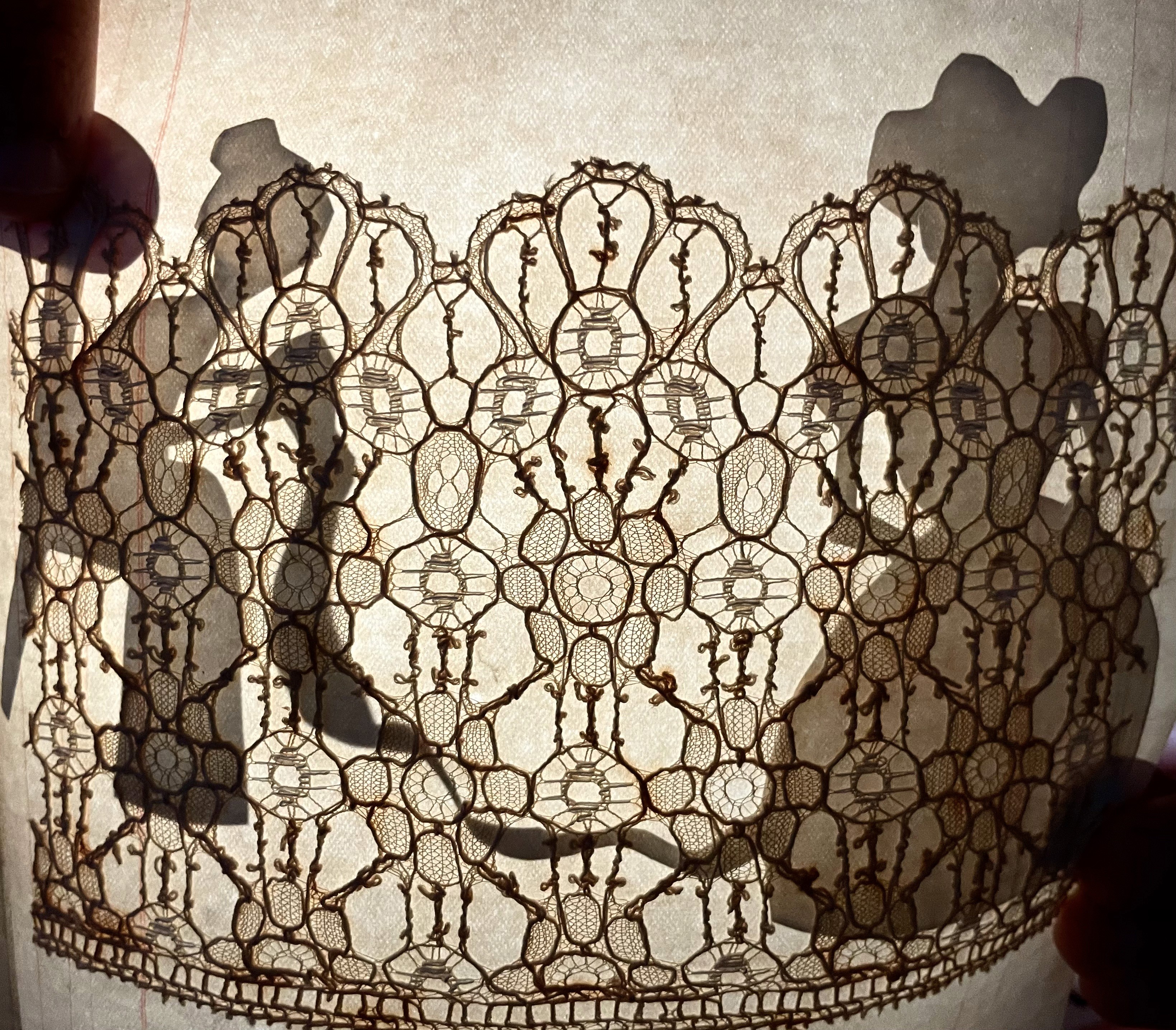
This postcard reimagines a delicate lace trademark from the perspective of its unnamed maker. Through drawing and narrative, the team explored the emotional distance between creation and use - a woman who weaves, but will never wear what she creates.
Their stream of consciousness (Left below) story mourns this quiet separation, turning a single page of an archive (Right Below) into a profound act of empathy.
"Airy, delicate stories woven from thread,
untangling stories of the past
through the mystery of the mundane.
Beauty created by a woman who
will never use it to adorn herself;
created for a woman who
will never know the toil of craft."
- Priyanka Goel, Mustafa Motiwala & Oluwabukola Elegbede (Workshop Participants)
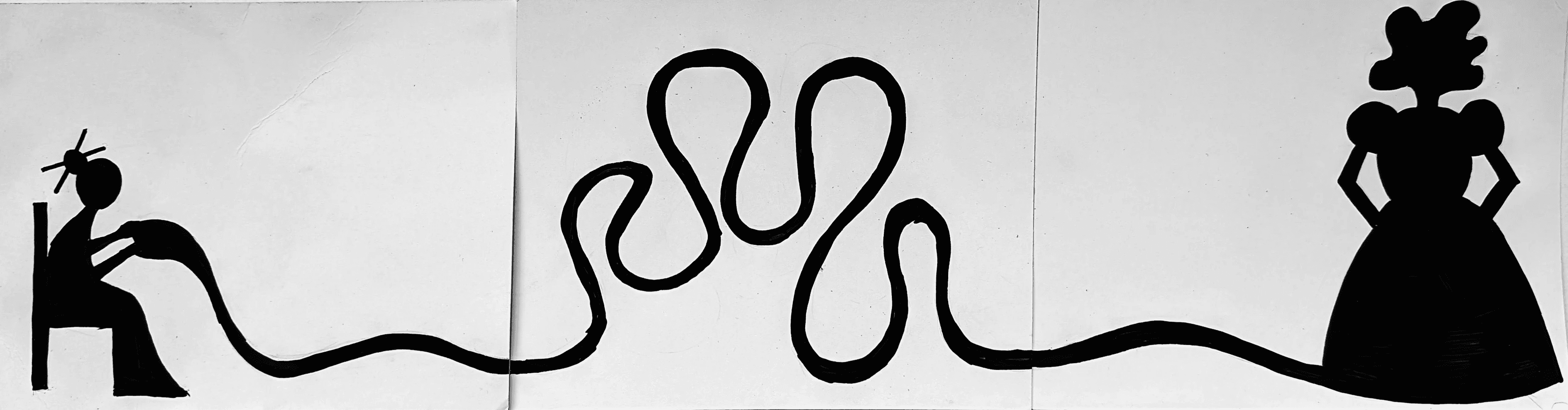
A flowing thread connects the maker to the wearer - a metaphor for invisible labour, care, and forgotten authorship.
Olivia Gecseg (Visual Records Specialist) and Hari Chandrapal (Senior User Researcher) will be using this brilliant, explorative framework for their Registered Designs Collection as an official National Archives workshop.
Alaistair Steele
Course Lead (User Experience Design UAL)
Replicable Framework
By making the archive more explorable and open to reinterpretation, we gave the National Archives a structured tool they could employ.
Scalable Design
A framework that could scale across teams, adapt for visitors, and open up new, creative ways of engaging with government-held records.
This project reminded me of why I design: to create access, emotion, and possibility where previously there was none.
It also reaffirmed how speculative, affective, and sensory methods- when combined with structured design practice- can unlock powerful outcomes for institutions.
Creating participatory spaces means holding room for emotion, play, and reflection- not just output.